Category: Relaxation

Practical information on how to relax with needle felting.

  • Relieve Stress with Needle Felting

    Relieve Stress with Needle Felting

    Do you find it difficult to slow down, relax and let go of your worries? Learn how to relieve stress with needle felting!

    Needle felters all around the world like emphasising how therapeutic this special craft is. So, let’s see how needle felting can help you relieve stress and reduce anxiety!

    What is needle felting

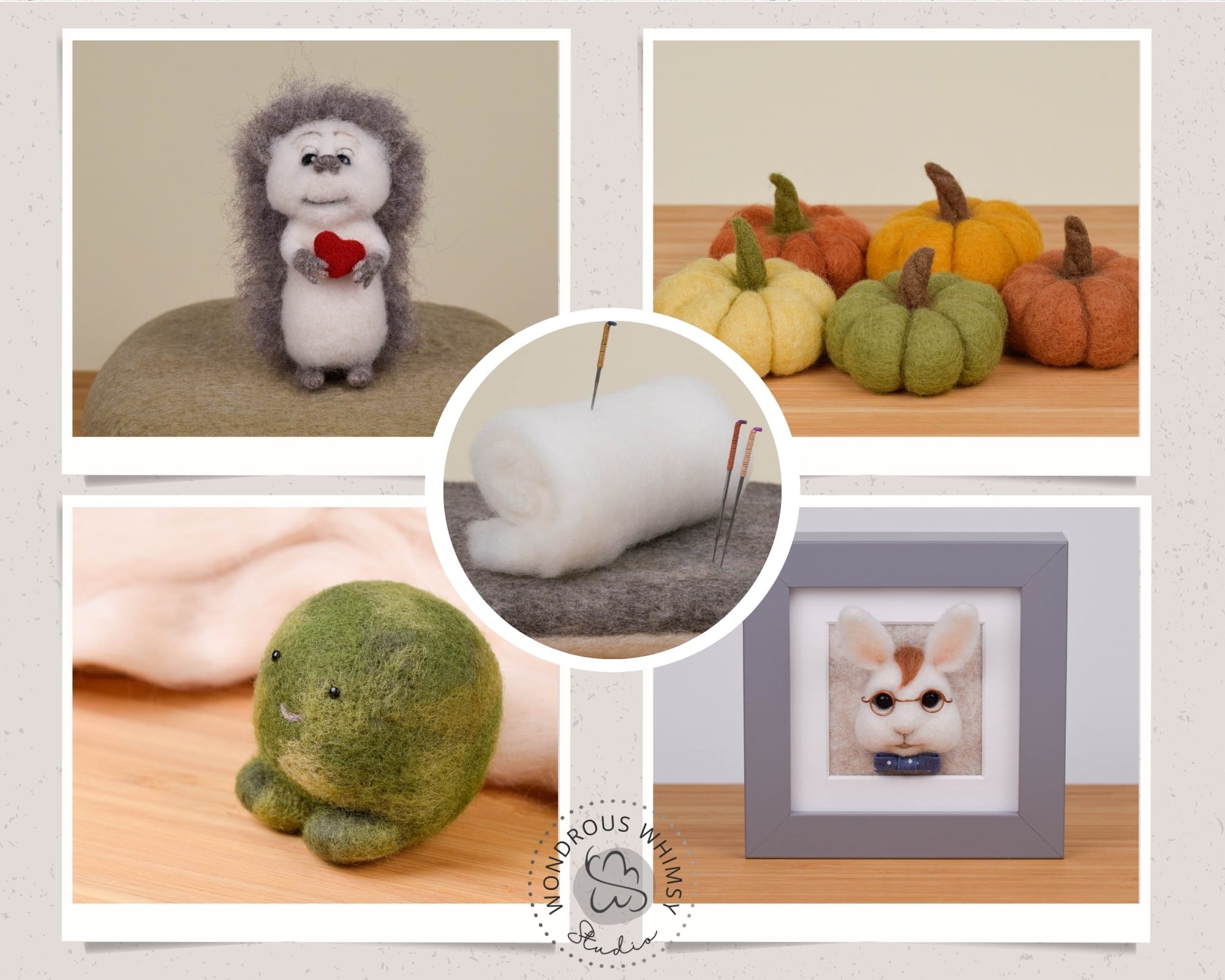
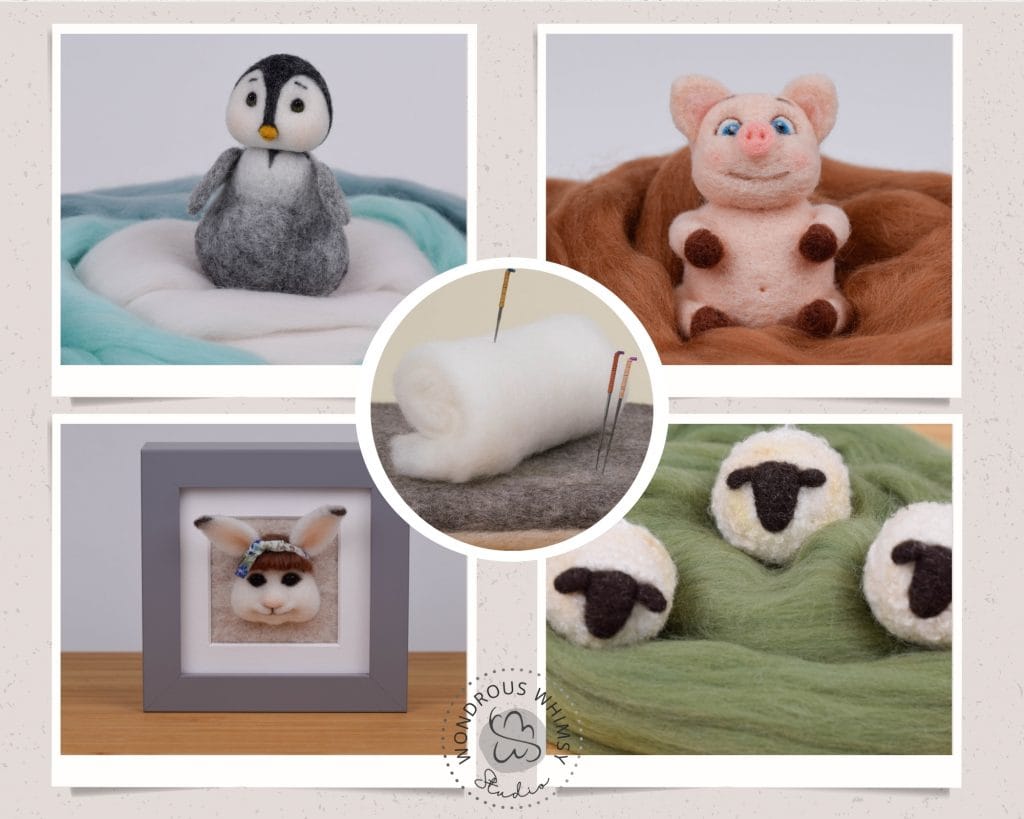
    Collage of needle felted figurines 3

    In case you haven’t heard of this interesting handcraft, needle felting is the process of turning wool into different 3D sculptures, decoration pieces or 2D art with the help of a special needle that have notches along its shaft.

    When you poke the needle into the wool the notches catch the fibre and tangle them with other fibres. A lot depends on how long you needle felt that lump of wool and from what kind of directions. You can create lots of different shapes. It is also your choice how firm you want to felt your figurine.

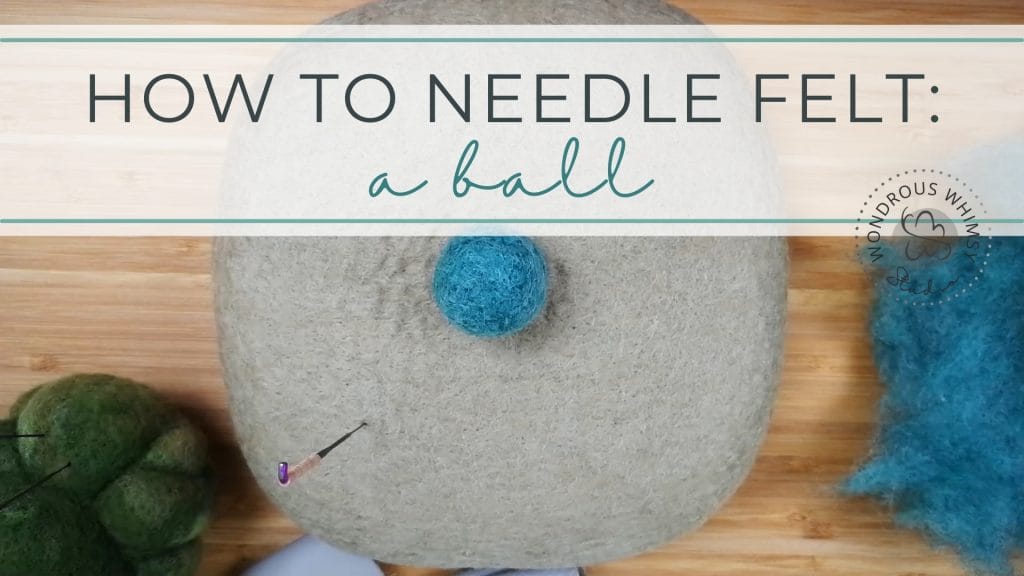
    Take a look at the video below to see how to needle felt a simple ball.

    Click to play

    How needle felting can help you relieve stress and reduce anxiety

    If you’ve watched the video  about how to needle felt a ball, you may wonder how this seemingly simple craft which involves some wool, a special needle and some stabbing can help you if you’re feeling stressed. I’ll explain in a minute. But first, I have to note that all the positive effects needle felting can have on someone’s health come from practising it not just once and not just for a short time, say 30 minutes.

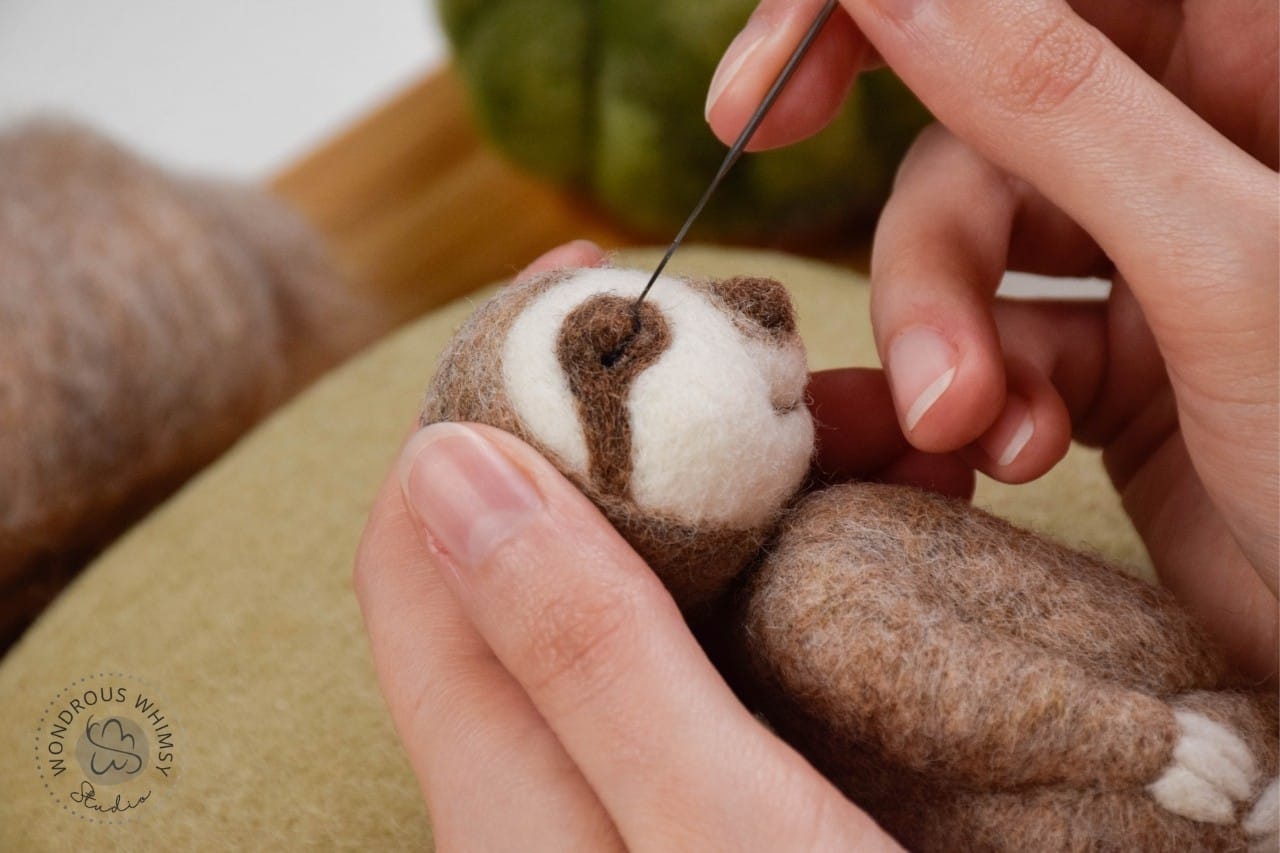
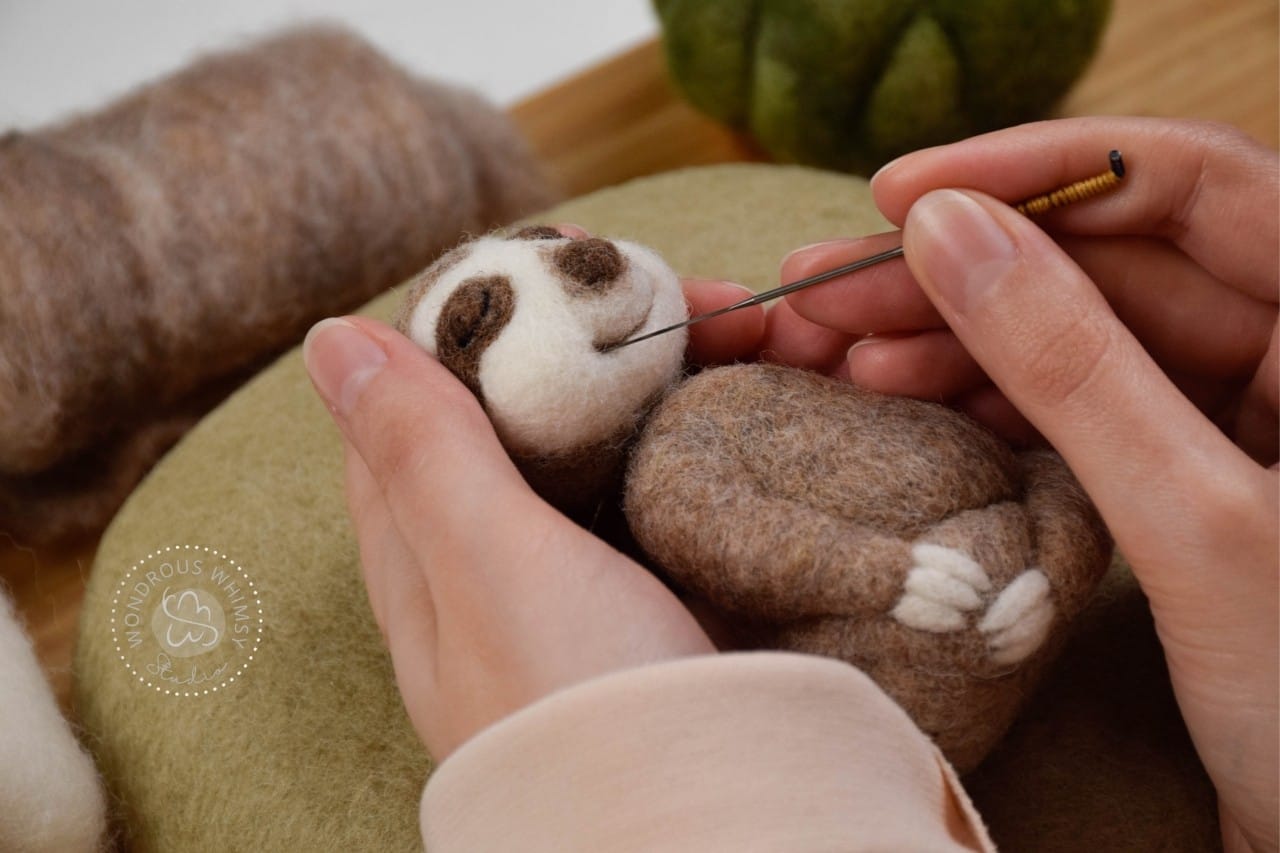
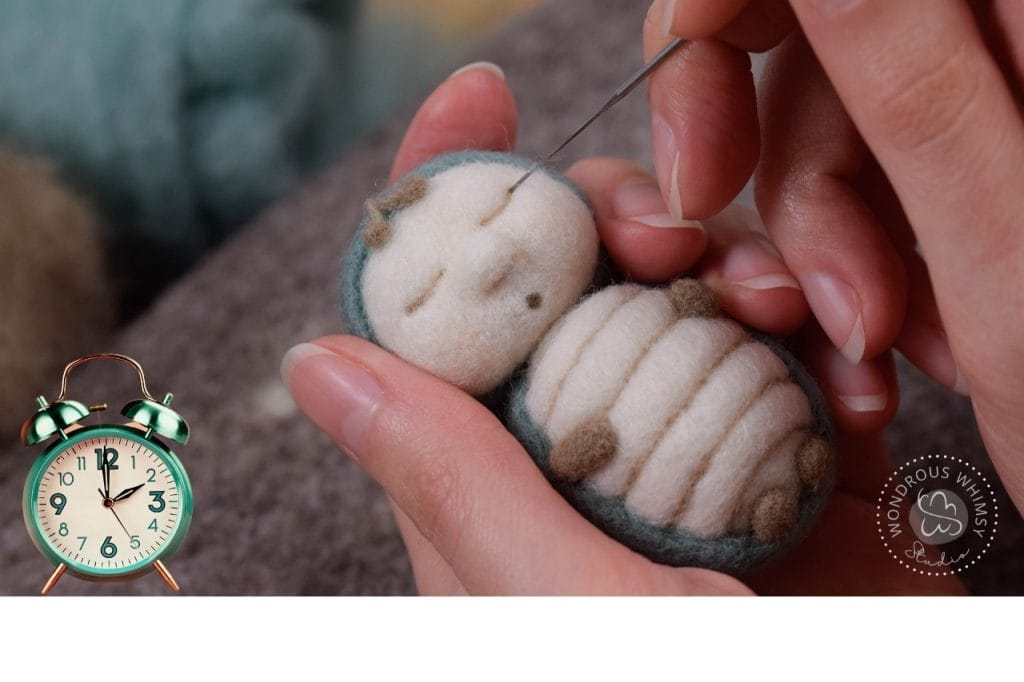
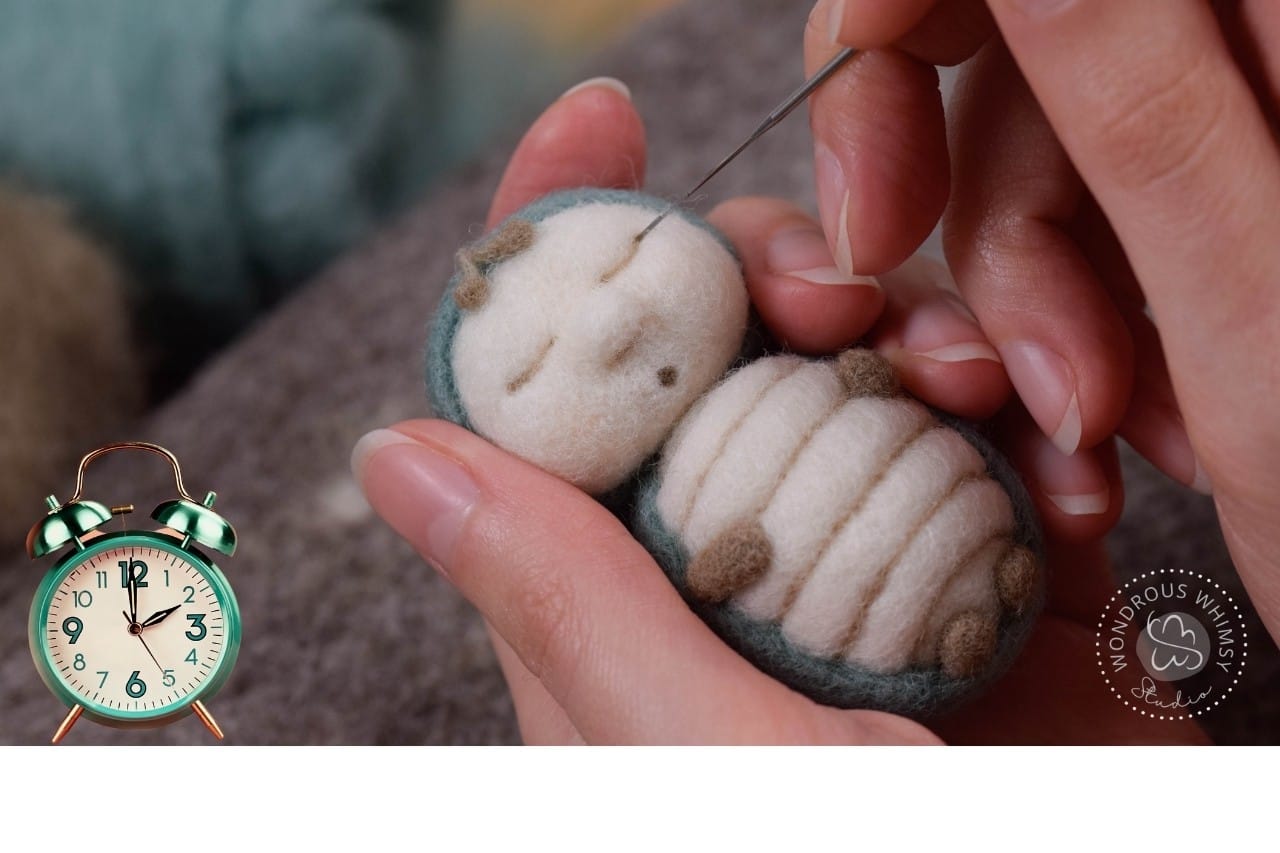
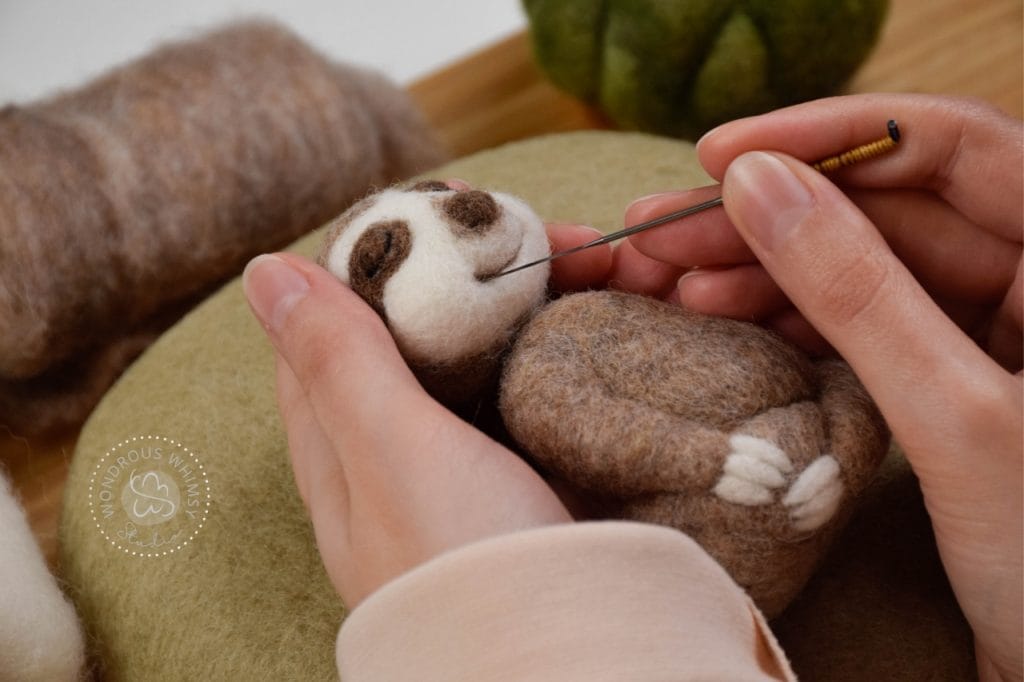
    Hand working on needle felted sloth face

    Stress evaporates in the flow state

    Imagine this: You are so focused on something that you lose track of time. You don’t even realise that it’s way past lunch time and you haven’t eaten since breakfast. But it doesn’t even bother you one bit. Moreover, you concentrate so much on what you are doing that your worries basically don’t exist then and there. And the thought of other tasks doesn’t even cross your mind.

    You are not nervous at all, you have clarity about what you are doing. And you have a goal with your activity. Also, everything you do seems effortless because you are full of energy. Interestingly, your mind is clear and your ego vanishes. You are shielded: tiredness, brain fog and distractions can’t reach you. That’s when you are in the zone.

    If you have experienced all of this, then you’re one of the lucky ones who have been in a mental state that is called the FLOW. This term is named by Mihaly Csikszentmihalyi. It is defined as ‘the mental state in which a person performing some activity is fully immersed in a feeling of energized focus, full involvement, and enjoyment in the process of the activity’ (1). You can read more about it in his book, Flow: The Psychology of Happiness. 

    When there are no distractions and all negative thoughts and worries evaporate and only the enjoyment of the activity at hand remains, it’s easy to feel relaxed and calm. Needle felting – and any other handcraft actually – can help you get there.

    What activities cannot promote the flow state

    It’s important to mention that passive activities like watching TV cannot help you enter the flow state. In the same way taking a bath or getting a massage will not help you get in the zone. That’s passive relaxation which is different from the flow state. If you want the flow, you need to do some kind of activity. Something that you are motivated to do and not one that you should do or you are told to do.

    How needle felting can help you enter the flow state

    Now, that you know what the flow is and how it could help, let’s see what its conditions are. And how needle felting can help you get there.

    • You need to know how to needle felt. Choose a project that offers detailed instructions with photos and/or videos. 
    • Have a goal with your needle felting. Knowing why you are stabbing that lump of wool will help maintain focus. This does not have to be a big goal, a beginner project will do if you’re just starting out.
    • You need to to see how your needle felting project is going – aka feedback. This way you can adjust your technique to be able to craft towards the goal.
    • This condition can be easily met thanks to the nature of needle felting. If you are adding smaller amounts of wool to your project, you’ll always be able to see whether you are doing it right or wrong.
    • The difficulty of your chosen needle felting project and your skills must have a good balance.  Having a challenge is important to maintain focus and the desire to make the project.
    • However, if you overshoot and choose a more advanced project (simply because you like that it looks better) and you’ve never done any needle felting before, then you won’t be able to either enter the flow state or stay in it for long.
    • On top of that, it can make you anxious as well making you give up on this awesome craft – and that would be a huge loss. So, try to aim for projects that are ‘a bit above’ your level.

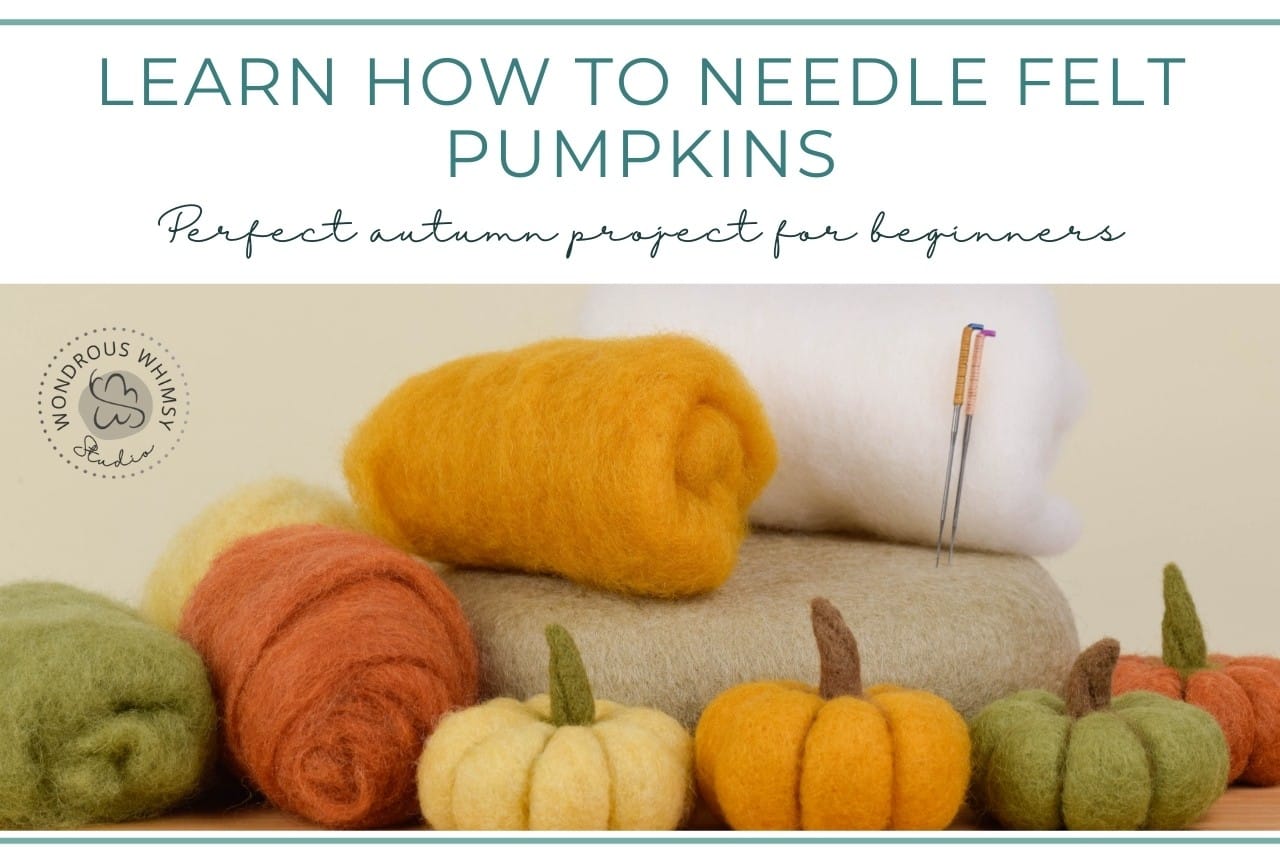
    And if you can’t wait to get started, try making pumpkins first! Learn how to poke a lump of wool to turn it into a pumpkin with a tutorial that meets the above mentioned conditions. Click on the photo below!

    Needle felted pumpkin tutorial post image

    Are you ready to relieve stress with needle felting?

    Learning how to get in the flow state can be one of the most beneficial things to learn if you are struggling with stress and anxiety. And with the help of needle felting you can learn how to calm your mind and feel centred again. 

    It can also be a really good stress-relieving option for those who have already tried meditation but find sitting in one place too challenging and prefer to do something – especially with their hands. Think about it as active or creative meditation! 

    If you would like to know more, read my post about ‘How to practise self-care with needle felting’.

    How to practise self-care with needle felting

    Are you ready to give it a try? Let me know in the comments below? Have fun and see you in the zone!

    Happy felting!

  • How to Practise Self-care with Needle Felting

    How to Practise Self-care with Needle Felting

    Do you feel restless when you try to meditate or unwind? Then don’t miss this guide on how to practise self-care with needle felting!

    Most people understand nowadays that self-care is important. It is well-known that exercise, yoga, meditation or being in nature can help you cope with stress. However, it is still less recognised that arts and crafts can be just as effective. They usually get categorised as hobbies that don’t have any benefits. But crafting is self-care!

    Let me show you some simple steps on how to practise self-care with needle felting. 

    What is needle felting

    Collage of needle felted figurines 2

    In case you’re not familiar with needle felting, it is the process of turning wool into different 3D sculptures, decoration pieces or 2D art with the help of special needles that have notches along its shaft. When the needles are being poked into the wool the notches catch the fibre and tangle them with other fibres. The possibilities of what can be created with needle felting are endless.

    Why needle felting is a good self-care activity

    Needle felting (and other kinds of crafts too) can be easier for someone who is just beginning to take time for self-care. Why? Simply, because most of us can find it hard not to do something productive because it is usually perceived as idling. No wonder that many people find meditating hard to do. For them simply sitting and not doing anything can be even more stressful.

    And the reason of that is simple: they haven’t learned how to slow down. Because in order to relax and practise self-care, first you need to slow down. Needle felting can help you get over that initial obstacle of “not doing anything”. The repetitive movement of the needle will give you two things: 

    • something to do, so you won’t feel idle and 
    • a chance to slow down imperceptibly.

    Needle felting can help you enter the flow state

    The flow state, also known as ‘being in the zone’, is the perfect mental state in which you can let go of all of your worries and problems. You can relax, feel energised and good about yourself while concentrating intently on the task at hand. This is exactly what we want to get out of a relaxing needle felting fun.

    Read more about how needle felting can help you cope with stress and reduce anxiety in the ‘Relieve stress with needle felting’ post.

    Relieve stress with needle felting 2

    How to practice self-care with needle felting

    STEP 1: Embrace slow crafting

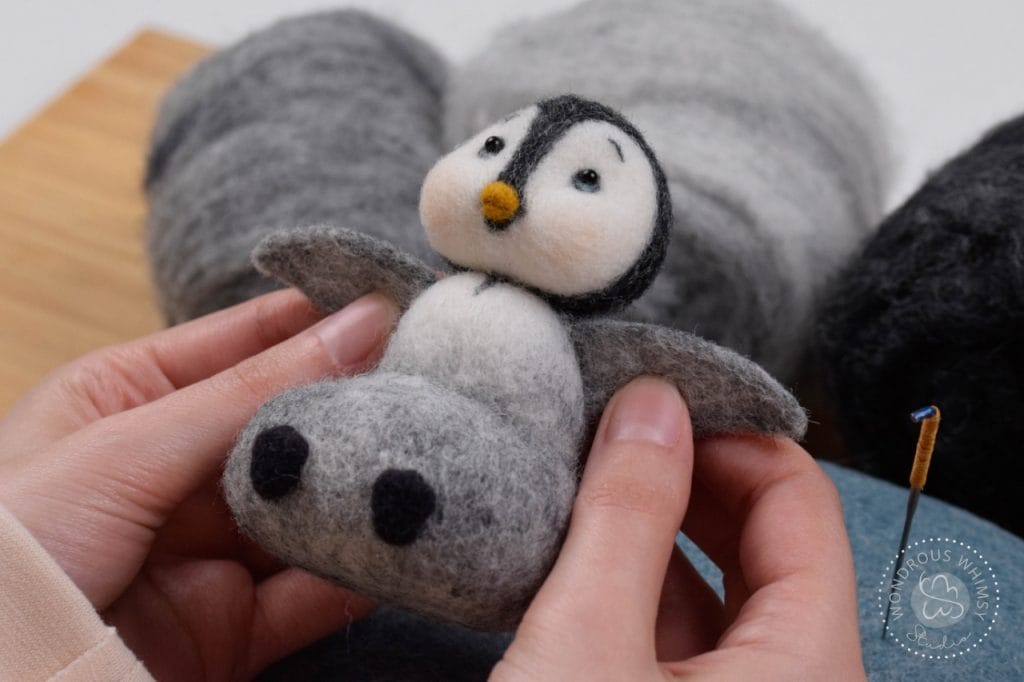
    Needle felted sitting penguin feeling happy

    Those who love crafting know that even a short time – say 15-30 minutes – spent on our favourite craft can make us feel good. It can make us smile and make us think that ‘yes, I did some crafting today’. But, unfortunately, it won’t really help if the goal is self-care, relaxation and reducing anxiety.

    What short and fast projects can give us is a hit of dopamine which will quickly wear off. They can’t help us get ‘in the zone’ and be absorbed in a project.

    Being able to fully focus on an activity without noticing any kind of distraction – not even the need to eat or drink – is one of the conditions that needs to be met if we want to enter the flow state. That is hard to accomplish within 15-30 minutes, especially if someone is just starting out.

    If your purpose is to calm down and let go of your worries and the stress of your lives, slow crafting is the way to go. Needle felting is a perfect example of a slow craft. It takes time and even beginner projects can require an 1-3 hours of your time (or even more).

    STEP 2: Choose your needle felting project carefully

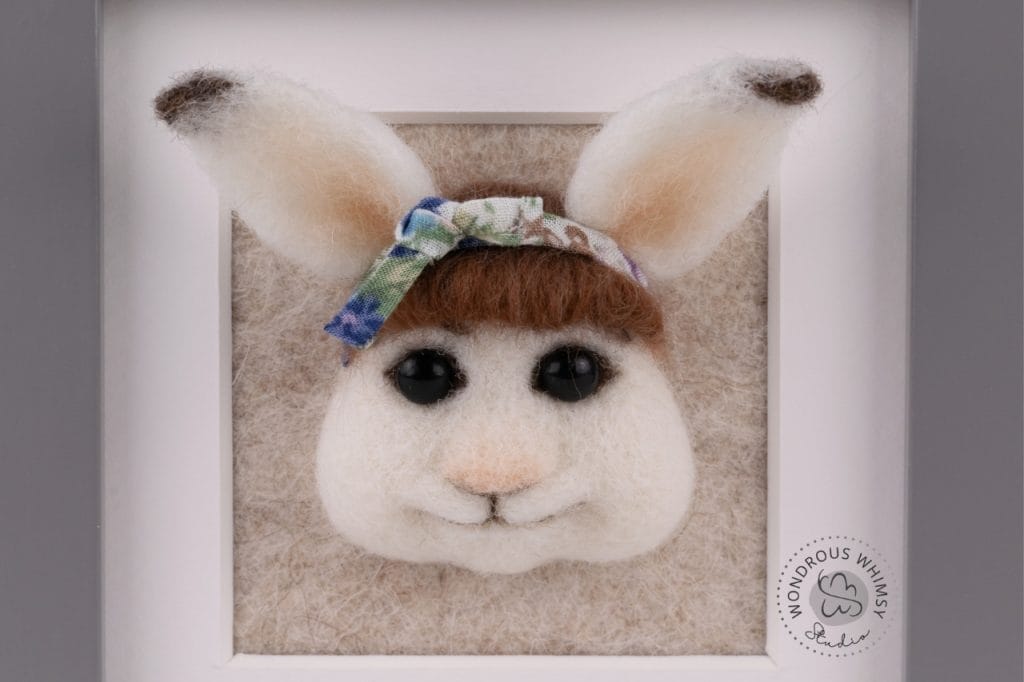
    Becca - needle felted bunny head in frame

    Saying that you should choose a needle felting project that you like may sound obvious, but please bear with me because there are some hidden traps you might fall into!

    When we choose a project we go through several options that we see, and usually settle for the one we prefer most. However, crafting and more specifically spending time on crafting can make people feel that it is an indulgence. They may also feel that it is something to apologise for, something to feel guilty about or even be ashamed of.

    The culprit is the ‘modern’ perception of crafting as a mere hobby. In this sense, you can do it only when you have finished all of your other important tasks since that is when you deserve it! 

    Even if you may not acknowledge this consciously, this idea is usually in our head lying beneath the surface. It could influence every decision in connection with your crafting choices and even the outcomes. To avoid any bad feelings try to keep the following tips in mind.

    TIP #1: YOU need to love the project you choose and no-one else

    Choose a project that you like because it makes you feel something. In this way you can avoid choosing something that you think you should do. To see what I mean, here’s an example. 

    Let’s say that your family likes realistic and life-like art. You spot two different needle felting projects. One about how to make a more stylised beautiful doll, and one about how to make a realistic sunflower out of wool. You may like the sunflower as well, but what actually makes you feel good – for any reason – is the doll. In a situation like this, it can happen that you’ll end up choosing the sunflower because you think that is expected of you.

    Do you see what I mean? Needle felting is for you and for your benefit only. You do not need to please anyone else with your projects!

    TIP #2: Avoid the productivity trap

    Choose a project that you think could be fun to try regardless of the outcome. In this way you can avoid choosing a specific project that you think can prove that you spent all that time productively. In our day and age, productivity is glorified and can make people think that they have to be productive all the time to be happy and satisfied.

    However, when you want to practise self-care with needle felting productivity does NOT matter.

    The desired outcome of a successful needle felting self-care fun is not the perceived quality or value of the end result. Your success is measured by how calm, energised and satisfied you are.

    For example, if you really like a project that shows you how to make a simplified minimalist dog statue that looks easy, go for it! Do not choose a more detailed project of a dog just because you think you need something to show for the time spent on making it.

    STEP 3: Make sure your project meets the conditions needed for the flow state

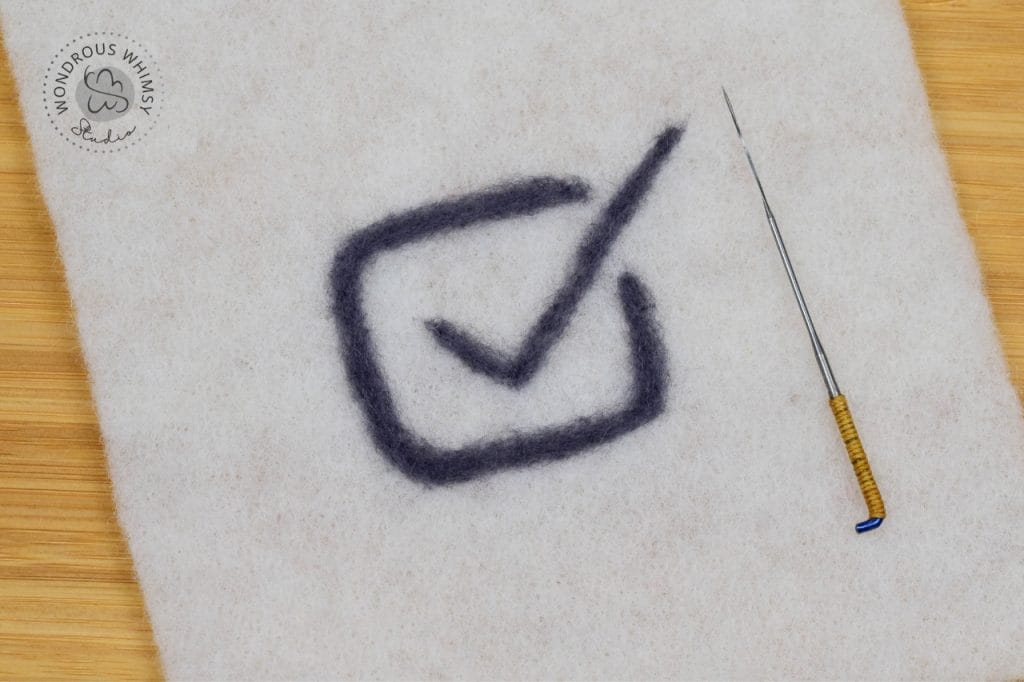
    Needle felted checkbox on 100% pre-felt

    There are four main conditions (other than the already mentioned length of the project) that need to be met if you want to get in the zone. They are also important if you want to make sure that you stay in the flow state.

    • You need to know how to needle felt, so choose a project that offers detailed instructions with photos and/or videos.
    • Have a goal with your needle felting, which is easy if you choose a project to follow.
    • If you want to make your own needle felted figurine, it’s best to sketch what’s in your mind first.
    • The only exception is intuitive needle felting, when you want to follow your creative instincts.
    • You need feedback to see how your needle felting project is going so you can adjust your technique to be able to craft toward the goal. 
    • This condition can be met easily thanks to the nature of needle felting. If you are adding smaller amounts of wool to your project, you’ll always be able to see whether you are doing it right or wrong.
    • The difficulty of your chosen needle felting project and your skills must have a good balance. Having a challenge is important to maintain focus and the desire to make the project. No-one wants to be bored.
    • However, if you overshoot and choose a more advanced project (simply because you like that it looks better) and you’ve never done any needle felting before, then you won’t be able to either enter the flow state or stay in it for long.
    • On top of that, it can make you anxious as well making you give up on this awesome craft – and that would be a huge loss. Try to aim for projects that are ‘a bit above’ your level.

    STEP 4: Create a warm-up ritual for practising self-care with needle felting

    I know that this point may be something of a surprise to you. But warming up for a needle felting self-care activity can help you slow down and relax sooner. 

    This warm-up practice is based on my own experience and not backed up by science like the flow state. So, it’s up to you whether you accept this advice or not. However, I think it’s worth giving it a try and even creating your own routine.

    I first got the idea of the warm-up practice from a book entitled The Power of Habit by Charles Duhigg. He mentions that if we want to form a new habit, it’s a good idea to use a cue that signals to our mind that a specific activity is about to happen. In this way we can slip into the required mindset more easily and performing the activity won’t be such a challenge.

    How it could look like

    Many creative people – for example, writers, painters, designers etc. – use some sort of a cue or “ritual” before they begin creating. For some this could be as simple as brewing a cup of tea first and placing it on the same spot on the desk each time. Then, sitting down in a comfortable chair. In the same one each time. All of it is not just preparation but can also give you and your activity a sense of continuity.

    If the craft is painting, then the next step is placing a new piece of watercolour paper on the desk. Then, the same watercolour paint palette with the favourite brushes.

    Doing it mindfully means that the mind does not wander but stays in the present. For some it’s enough to look at the objects on the table to do that, for some a longer physical contact is necessary.

    The idea behind such a ritual is that the actual activity – in our case needle felting – does not start only when we first start poking a ball of wool, but minutes before that, by the preparation. It could be especially useful if you truly want to relax and practise self-care with needle felting. 

    So, now I’m going to describe what I do. You can also try it, but I urge you to create your own ritual that best suits your needs and personality.

    My warm-up ritual

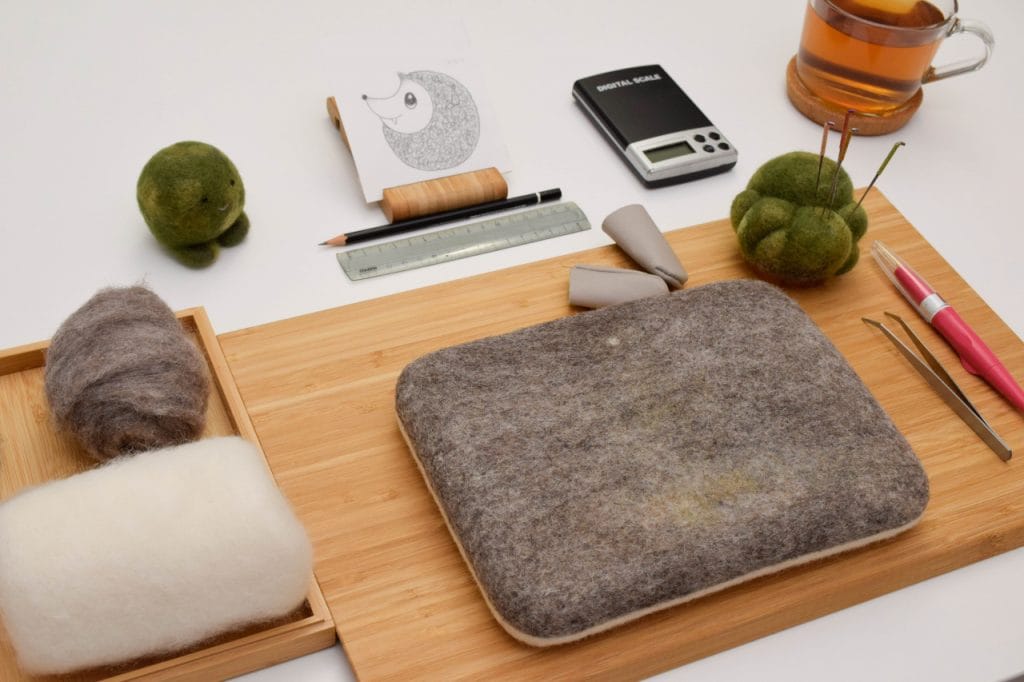
    Desk prepared for needle felting

    While my Earl Grey is brewing, I put everything else away off my desk. Then I place everything I need and want to use that day on my desk, including the sketch of that day’s project. I always put all my tools in the same place – it always feels like continuity and helps me get into the same mindset more easily.

    When my tea is ready it goes into its usual place, like everything else. Its smell always makes me want to take a deep breath, so I do just that before putting it on the desk: a long inhale and exhale.

    Before I sit down, I stretch my arms upwards and take several more deep breaths, look at my prepped desk and smile.

    When I sit down, I take a lump of wool – the one I intend to start with that day – and concentrate on how it feels between my fingers, how warm it is, how smooth it is and so on. That is how I connect with the material I am going to use. Also, this is the moment when I always remind myself to let go of perfectionism (which I struggle with) and to let go of the notion of being productive.

    Now, all of this does not take long, maybe 5 or 10 minutes. Also, depending on the project I am about to work on, I sometimes choose to listen to music or an audiobook or just work in silence.

    What to pay attention to when creating your own warm-up ritual for your self-care practice

    Your ritual can be completely different and that’s okay. However, try to focus consciously on a couple of things as they can help you get in the mood more quickly or can help you slow down more easily if you have done something faster previously.

    • Pay attention to your breathing while preparing. Take deeper breaths than usual.
    • Deliberately move a bit slower than usual. You are not in a hurry!
    • Stretch you body before sitting down.
    • Make sure you are comfortable: clothes, warmth, fresh air, light in the room, chair, etc.
    • If you need music, make sure that it’s not too fast or loud because wanting to dance can make it more difficult to focus all your attention on the activity.
    • Involve all of your senses if you can.
    • Look at the shape of your tools, the colours of your wool.
    • Smell the wool, if you like its smell. Smell your coffee or tea. If you like, you can also use your favourite essential oil.
    • Touch the materials you’re going to use. Notice how soft or coarse the wool is.
    • Listen to your deeper-than-usual breathing or your choice of relaxing music. (Later on, while you are creating listen to the sounds of needle felting. Its rhythm can also help you relax.)
    • If it’s not your first project, you can also place your previous figurines on your desk, as your little helpers. Remember to touch them too and notice how they feel.

    All of this can help you be mindful and feel purposeful when you practise self-care with needle felting. Enjoy!

    STEP 5: Plan your needle felting time ahead – think about it as a mini retreat

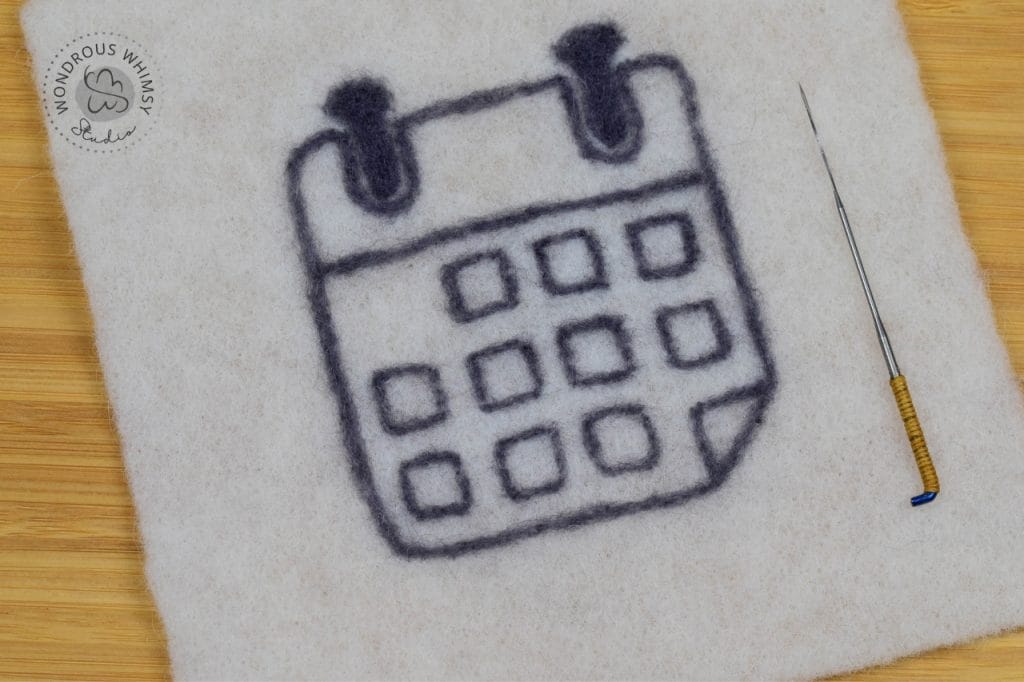
    Needle felted calendar on 100% pre-felt

    You need the space, time and mindset so you can practise self-care with needle felting successfully. To accomplish that, it is a good idea to plan ahead and decide when you want to do it. Remember, we don’t talk about 15-30 minutes, but a longer time period, at least and hour or an hour and a half or even longer.

    You know your schedule, so I’m not going to talk about how to find the time here. You can read about my advice in the post ‘How to find time for needle felting (and other crafts)’.

    How to find time for needle felting and other crafts

    Any kind of self-care takes time and some forms of practice can require a longer time. If you want to go to a group yoga session, for example, and you need to drive there and back, you already know that you need at least 1.5 or 2 hours to do so. The same is true for needle felting, without the added stress of driving.

    When you plan where, when and how you are going to practise self-care with needle felting, think about it as a mini retreat. Think about what you need, as in materials and tools, space and conditions. Make sure that the time is yours only and minimise the possible distractions as much as you can.

    Later on, if you want to needle felt with kids, friends or family that’s fine, but self-care is about you and only you! You have permission to take care of yourself!

    Regularity is key

    In order to reap the benefits of needle felting as a self-care tool, you have to make it a routine. Just like with everything else in life, only regular practice of this slow craft will make a difference.

    The same way  one healthy dish won’t help you lose weight, one needle felting mini retreat also won’t lower your stress level forever. It’s worth thinking about how you can build it into your weekly or monthly routine. One 2-3-hour-long practice at the weekend? Or maybe a longer session twice a month or once a month?

    Are you ready to use needle felting as a means to relax?

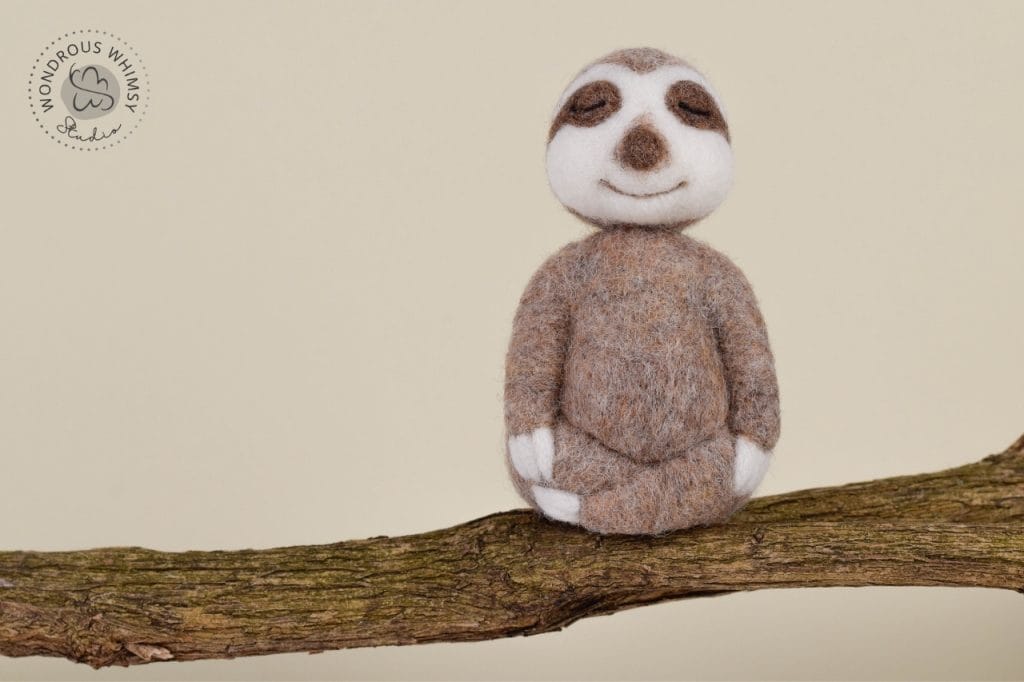
    Needle felted sloth on a branch

    Needle felting as a slow craft is one really good way to help you practise self-care. Slowing down is key if we want to reduce stress and anxiety in our life, and this awesome craft can help you learn how to do that.

    The steps and conditions mentioned don’t represent a one-size-fit-all way of how to relax with your needle felting project – or with any other crafting project for that matter. However, in my experience they can highly contribute to the positive outcome of a crafting time if your goal is self-care. 

    Are you ready to give it a try? Do you have your own needle felting self-care tips? Let me know in the comments below?

    Happy felting!

  • How to Find Time for Needle Felting (and Other Crafts)

    How to Find Time for Needle Felting (and Other Crafts)

    Do you find it difficult to find time for needle felting or any other favourite handcraft? This guideline could help you!

    When I first showed one of my more elaborate needle felted sculptures to one of my friends, she asked, almost immediately – after praising my creativity -, how much time it took to make it. When I told her the actual number (9 hours), she was shocked and said that she couldn’t do that because she wouldn’t be able to work patiently on one figurine for that long. Even after I said that it was not one day, she still protested that it would be impossible for her to do that.

    That got me thinking: why? People spend time on so many things that are not important – binge-watching series, scrolling through social, just to name a few. So why is it that the same amount of time spent on any creative activity seems not doable? Thinking this through made me write about how to find time for needle felting and any other crafts.

    Let me start by how I think about needle felting and crafting. Then, I would like to share a guideline hoping that it would help you find YOUR time for needle felting or your other creative activities. I would like to ask you, though, to not jump ahead. Without reading the first part the guidelines will mean nothing to you.

    The concept of slow crafting

    Slow crafting examples

    If reading that one piece of wool sculpture took me 9 hours and you think that’s a lot, I have to say that actually it is not. Bigger projects, more intricate and detailed projects – whether big or small – can take up to several days and even hundreds of hours. It all depends on the project.

    If that amount of time was supposed to be work, then I would cringe as well. However, needle felters LOVE doing what they do! It’s fun, and amazing, and relaxing and for a lot of us it’s therapy. It’s a way of dealing with stress, finding time to unwind and find tranquillity again. 

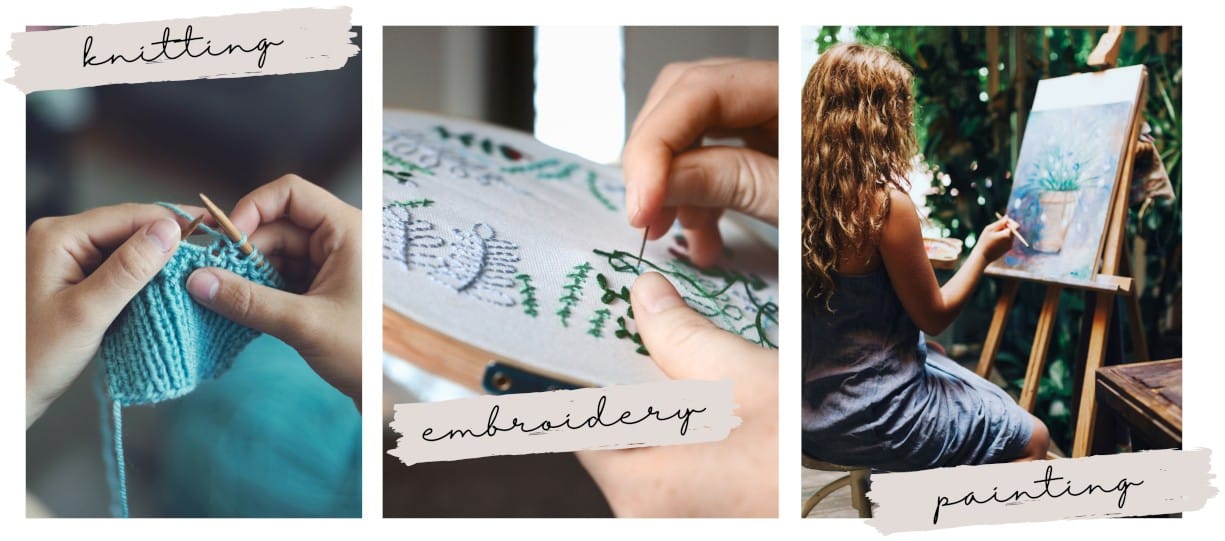
    That’s what slow crafting is all about. Slow crafting is a form of active meditation for the restless, who cannot sit and do nothing with their hands. It is self-care in a very ancient way. Take knitting, for example. People know it takes long hours to knit a pullover. The same way hand embroidering, painting, wood sculpting – and the list goes on – are all slow handcrafts.

    Those hours spent on creating something out of a few otherwise basically useless materials is a way not just to express your creativity but also to find that inner peace you feel you’ve long lost in this sped-up world we live in nowadays.

    Obstacles when we think about finding time for needle felting and crafting

    Interestingly, the obstacles we face are not physical. They are in our head thanks to certain social expectations and mainstream views. The following is strongly my opinion (and that of several other crafters), so it’s not aimed to attack anyone who thinks the below mentioned social expectations are valid or important.

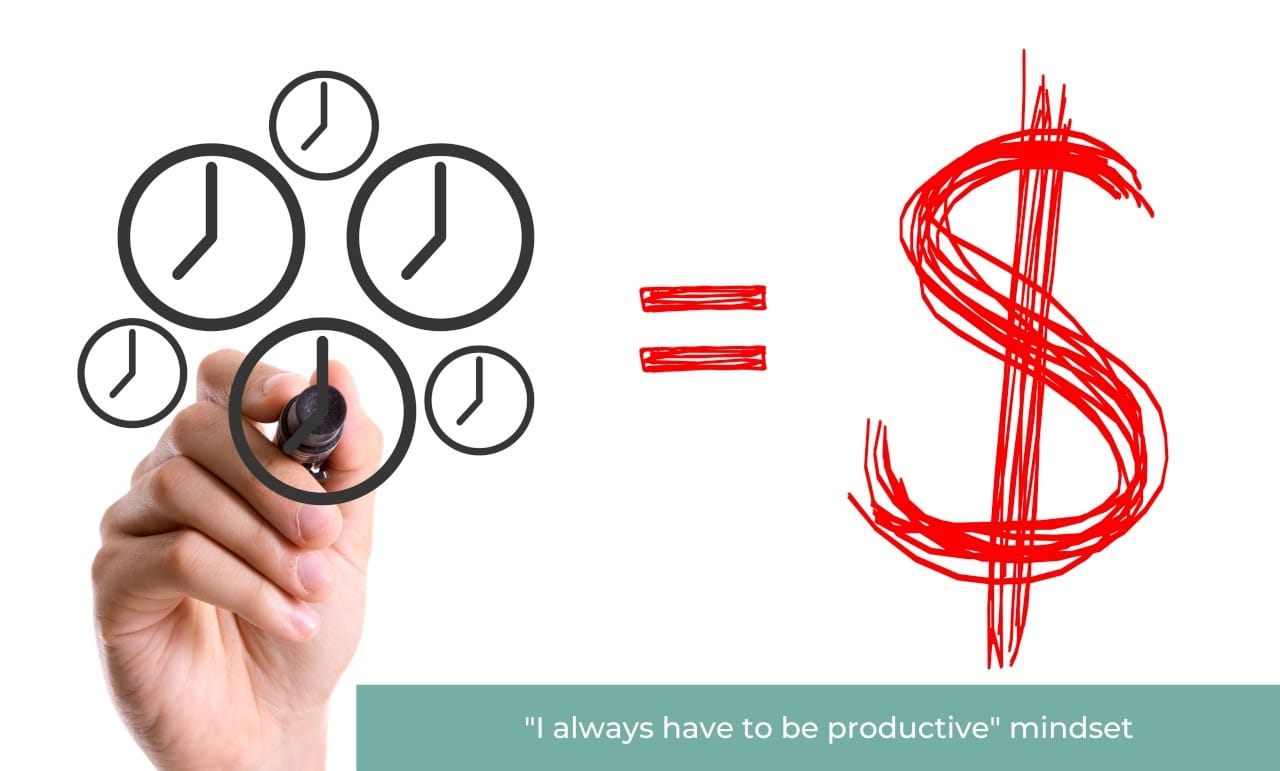
    Obstacle #1: Being stuck in an “I always have to be productive” mindset

    I always have to be productive - mindset

    If you look around the internet, you’ll see that countless people offer help in order to be more productive. When it comes to work, I also agree that productivity is a very important and useful skill.

    What I don’t agree with is that the idea of being productive penetrated other aspects of our lives as well making people think that they are only worthy human beings when they do something productive.

    Let me share you a little story about how dangerous it can be. About 10 years ago, my choice of crafting was knitting. I had a friend who seemed interested in my knitted blankets and said how great I was at it. And then she started asking questions: How long did it take? How much was the yarn? When I answered she asked another question which felt like being punched in the stomach: 

    “Why did you knit that if you could have bought it at a lower price? And the same time could have been used for giving at least 4 English lessons earning more money than the price of the blanket. What you did was not productive at all.”

    I don’t have to tell you how that made me feel: horrible. I was judged based on not being productive in my hobby! Consequently, I started to question my “right” to give in to my creative urges and I felt guilty for a VERY long time.

    I don’t think she understood what crafting meant to me, as she only did fast crafts, usually under 30 minutes.

    Unfortunately, it took me a long time to realise why her comment and judgement hurt that much. And, most importantly, why she didn’t understand my motivation. The answer: the expectation of being productive ALL. THE. TIME.

    How to tackle it

    Any form of slow crafting that requires you to be focused on and immersed in your subject is a way to take care of our mental health and relax. Productivity stands in the way of relaxation because it doesn’t let you experiment and follow your creative instincts or inspiration.

    Obstacle #2: Feeling guilty about wanting to spend time crafting

    Feeling guilty about wanting to spend time crafting

    Feeling guilty is very typical of a lot of women of any age (with or without kids) and it’s in strong connection with the first obstacle, but there’s more to it. Women all over the world feel guilty sitting down with their craft projects or even with a book and relax. Why do we think it is okay to watch a football or a film, but not okay choosing crafting over doing the dishes?

    It seems to me that when an activity is done for others – family, friends, community – it’s somehow validated and we think about ourselves as good and helpful people. But when there’s a choice between doing something that relates to others – like some household chore – or spending time on a creative hobby just for ourselves, usually the first wins.

    For some reason, spending time solely with the purpose of taking care of ourselves translates in our mind as selfish and bad. That’s just not right!

    How to tackle it

    When it happens to me, I always remind myself about the following line from the flight safety instructions: “Be sure to adjust your own mask before helping others.” A stressed, nervous, burnt-out (and the list goes on) woman can hardly be as good a partner or carer as she wants.

    The solution to finding time for needle felting and crafting

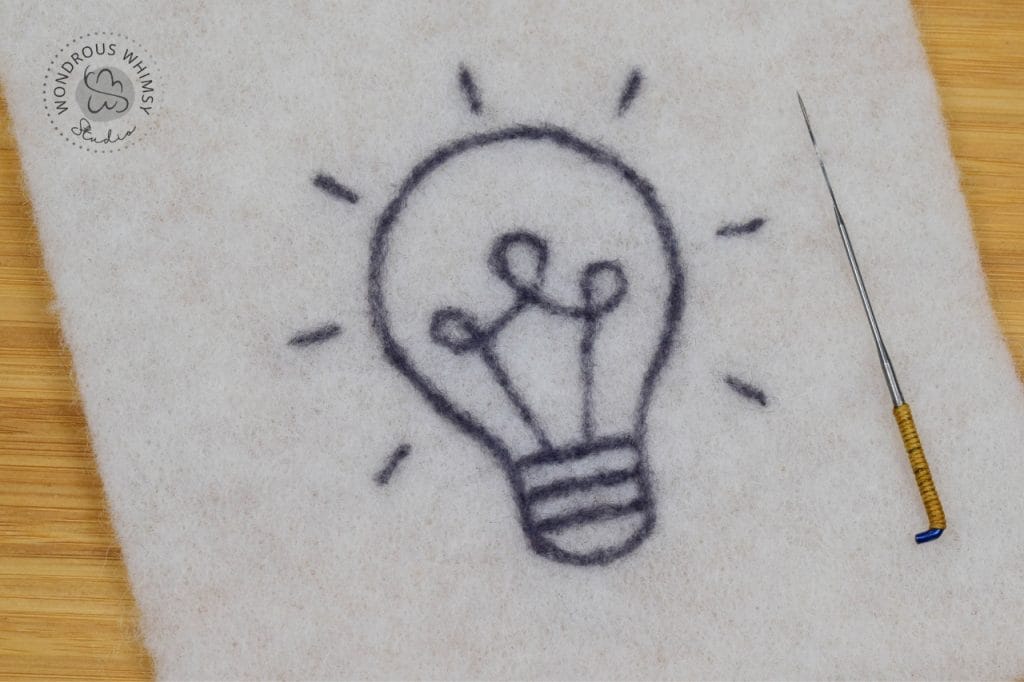
    Needle felted lightbulb on 100% pre-felt

    The very first step to find time for your favourite craft

    I hope that from the above mentioned two obstacles it is clear that no magic app or tip will help you find the time you need if you don’t take the first step: a mindset shift.

    Productivity has its own place, but it has no business permeating our creative crafting time that is aimed at relaxation. In the same way, guilt is a necessary emotion, but not when we want to take care of our mental wellbeing.

    The guideline on how to find time for needle felting and any other crafts

    I would like to point out that the following guideline has helped me to find the time I need. It was put together based on my experiences and what worked for me. You may need to incorporate other steps too so you can find the time you need.

    The very first thing is to keep in mind the following quote that is so true for all kinds of situations and for this one as well:

    “Whether you think you can or can’t, you are right.”

    — Henry Ford

    Embrace slow crafting as a means to a more relaxed and calmer you.

    It’s also a mindset shift. Slow crafting requires longer time since its purpose is to help you relax. And while sometimes even 30 minutes can be refreshing, more shorter craft times do not add up in the same way as one longer session. 

    Prioritise.

    Yes, I know it’s overused and boring to hear. So, let me put it this way: when you need crafting to care for your own mental health – either because you are recovering from a physical or mental problem, or because you want to prevent burning out or turning to dangerous and unhealthy coping mechanisms – then it is a priority.

    Talk to your family members and ask for help.

    You don’t have to do everything on your own. A family is like a small team and everybody should take responsibility for the wellbeing of its members. Communicate your needs and try to explain to them what you need and why you need it. Involve them, open up and help create an understanding that taking care of ourselves is important. You can also ask them to think about what kind of self-care they need.

    Try to make slow crafting a routine.

    You can only reap the benefits of slow crafting if you make it a regular practice. Just like going to the gym or any form of exercise is an accepted part of our self-care routine nowadays, you can extend this concept to crafting as well. There is no universal rule of how this routine should look like. For some it’s a daily practice, for some it’s weekly and for others it’s monthly. You have to work out what works for you best.

    Find the time you need for your crafting

    Thinking about time differently

    I hope I could help you see the problem of how to find time for needle felting and any other crafts in a new light. It’s never the time, it’s how we think about it and what we do with it. I’m really curious to see how the guideline works out for you. Please let me know in the comments below!

    Happy felting!

    PS: If you would like to know more the concept of crafting as self-care, read my post about ‘How to practise self-care with needle felting’.

    How to practise self-care with needle felting
>